• Opening Soon

Cosmetic Dentistry

Beautifully considered. Naturally yours.

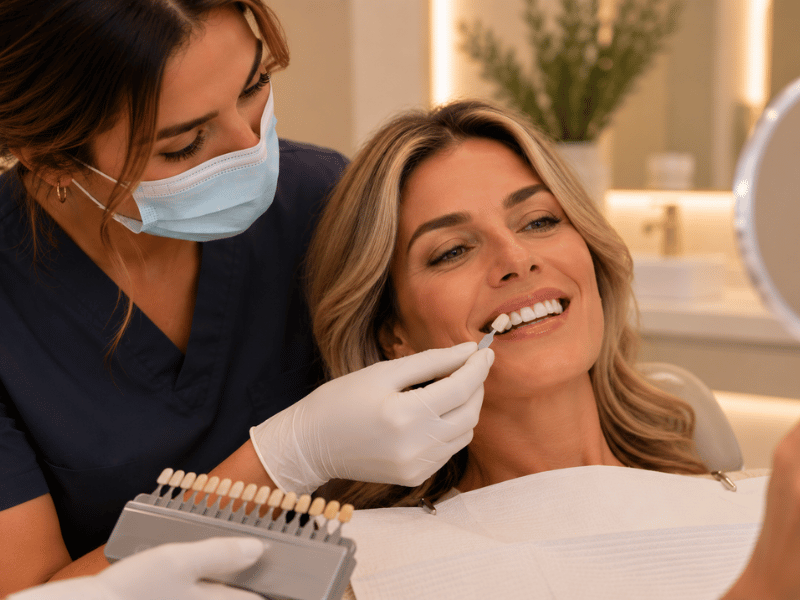
Dental veneers are thin, custom-made restorations placed over the visible surface of a tooth to refine its shape, colour, proportion or appearance. They can be considered for concerns such as worn, chipped, discoloured or irregularly shaped teeth, particularly where a longer-lasting ceramic restoration may be more appropriate than composite bonding alone.

At Sands End, veneers are never approached as a one-size-fits-all smile makeover. We begin by understanding what you would like to change, carefully assess the health and position of your teeth and gums, and consider whether a more conservative option could achieve your goals before recommending treatment. Where veneers are appropriate, the aim is simple: a smile that feels balanced, natural and entirely at home on your face.

Book a Cosmetic Consultation right line windmill plain arrow right line mammoth mountain plain arrow
Sands End Dental & Face Studio

What can dental veneers improve?

Veneers can change several aspects of a tooth at the same time, which can make them useful in carefully selected cases where more limited cosmetic treatments would not provide the desired result.

  • Tooth shape: Refine teeth that appear irregular, disproportionately small or differently shaped from the surrounding smile.
  • Worn or chipped teeth: Restore the visible form of teeth affected by selected areas of wear or damage.
  • Tooth colour: Improve the appearance of persistent discolouration where whitening alone may not provide an appropriate solution.
  • Smile proportions: Adjust tooth length, width and contour to create greater balance across the smile.
  • Selected spacing: In some cases, veneers can help address small spaces where restorative treatment is appropriate.
  • Existing aesthetic concerns: Replace or improve selected existing restorations where clinically appropriate and a new treatment plan is indicated.

Our Approach

Preserve first. Enhance second.

Veneers can create beautiful results, but cosmetic dentistry should never begin with the assumption that healthy tooth structure needs to be altered. Before recommending veneers, we’ll consider the condition of your natural teeth, your bite, tooth position, gum health and the other treatments that could achieve what you’re looking for.

  • Conservative planning: We aim to preserve as much healthy natural tooth structure as possible and only recommend veneers where the benefits justify the treatment involved.

  • Designed around your face: Shape, proportion, shade and texture are considered alongside your smile and facial features rather than designed in isolation.

  • Natural, not uniform: Beautiful teeth have character. The aim is harmony and balance rather than creating an identical row of overly white teeth.

  • Options before treatment: Where whitening, orthodontics, composite bonding or another approach may be more appropriate, we’ll discuss those alternatives with you.

Your veneer journey.

Veneers require careful planning. The exact process varies according to your teeth and the type of restoration being considered, but treatment generally follows a series of deliberate stages.

01
Consultation & Assessment

We’ll listen to what you’d like to change and assess your teeth, gums, bite and overall smile before discussing the appropriate treatment options.

02
Smile Planning

Shape, proportions, shade and the relationship between the proposed veneers and your surrounding teeth are carefully planned before treatment begins.

03
Preparation & Digital Records

Where tooth preparation is required, it is carried out as conservatively as clinically appropriate. Digital scans or other records are then taken so your restorations can be made accurately.

04
Fit & Refine

Your veneers are carefully assessed for appearance, fit and bite before being bonded into place. Final adjustments are made, and we’ll explain how to look after them.

Could veneers be right for you?

Veneers can be an excellent option in selected cases, but healthy foundations and careful planning come first.

  • Healthy teeth: Active decay and other dental problems should be addressed before elective veneer treatment.

  • Healthy gums: Gum health and gum position can significantly influence both the appearance and longevity of cosmetic restorations.

  • A suitable bite: Heavy biting forces, grinding and tooth position can affect treatment planning and the risk of damage.

  • Appropriate expectations: Veneers are restorations rather than permanent, maintenance-free replacements for natural enamel and may require repair or replacement during your lifetime.

Aftercare: Looking after your restored smile.

Veneers are designed for everyday function, but their long-term performance depends on the health of the teeth and gums beneath them as well as how they are cared for.

01
Daily Oral Care

Brush twice daily with fluoride toothpaste and clean carefully between your teeth.

02
Regular Maintenance

Continue regular dental examinations and professional hygiene appointments so we can monitor your vene

03
Protect Against Excessive Forces

Avoid using your teeth to open objects or biting very hard items. If you grind or clench, we may recommend additional protection.

04
Review Changes Early

Contact us if a veneer feels loose, chips or breaks, or if you notice discomfort or a change around the tooth or gum.

fees

Dental veneer fees

Clear pricing and a personalised treatment plan before you decide to proceed.

  • Cosmetic consultation: Free
  • Composite veneer: From £295
  • Porcelain veneer: From £750

The overall cost depends on the number of teeth being treated, the material selected and the complexity of your individual treatment plan. Following your consultation, we’ll provide a clear written plan and full costs before treatment begins.

Book a Cosmetic Consultation right line windmill plain arrow right line mammoth mountain plain arrow View Full Fee Guide right line mammoth mountain plain arrow right line man friday plain arrow

your questions answered

Frequently asked questions

What is a dental veneer?

A dental veneer is a thin restoration placed over the visible front surface of a tooth to change aspects of its shape, colour or proportion. Porcelain veneers are custom-made from dental ceramic and bonded to the underlying tooth. Composite veneers use tooth-coloured resin applied and shaped directly by the dentist. Which approach, if either, is appropriate depends on your individual teeth and treatment goals.

Do veneers require my teeth to be filed down?

Sometimes. The amount of tooth preparation required depends on factors including the position, shape and colour of your natural teeth and the result being planned. Some cases may require very little preparation, while others require more. Any removal of natural tooth structure is irreversible. We’ll explain exactly what would be required in your case and discuss more conservative alternatives before treatment.

Do veneers damage your natural teeth?

Veneer treatment can require permanent alteration of the natural tooth, so it should not be undertaken unnecessarily. When veneers are clinically appropriate, treatment is carefully planned with the aim of preserving as much healthy tooth structure as possible. The underlying teeth will still require excellent oral hygiene, regular examinations and ongoing restorative maintenance. If a less invasive option could appropriately achieve your goals, we’ll discuss it with you.

How long do porcelain veneers last?

There is no guaranteed lifespan for a veneer. Porcelain veneers can perform well for many years, but longevity varies according to the tooth underneath, bite, oral hygiene, habits such as grinding, and how the restoration is maintained. Veneers can chip, debond, fracture or require replacement over time, and the surrounding tooth and gum can also change. Regular reviews allow us to monitor them appropriately.

Do veneers stain?

Porcelain itself is generally more resistant to staining than composite resin, but that doesn’t mean a veneered smile is maintenance-free. Natural teeth around veneers can change colour, and staining or discolouration can occur around restoration margins over time. Good oral hygiene and regular professional care remain important.

Are veneers painful?

Veneer treatment is usually carried out with your comfort carefully managed. Whether local anaesthetic is needed depends on the amount of preparation and the individual case. Some patients may experience temporary sensitivity following treatment. We’ll explain what to expect based on your planned procedure and what to do if you have any concerns afterwards.

Can veneers straighten crooked teeth?

Veneers can sometimes change the appearance of mild irregularity by altering tooth shape and proportion, but they do not actually move teeth. Where tooth position is the main concern, orthodontic treatment may be a more conservative option and can sometimes reduce or avoid the need to remove healthy tooth structure. We’ll assess both possibilities before recommending treatment.

Should I whiten my teeth before getting veneers?

If you’d like a lighter overall tooth shade, whitening may be recommended before veneers are planned. Porcelain veneers themselves do not respond to whitening treatment in the same way as natural enamel, so establishing the desired shade beforehand can help us plan restorations that blend appropriately with the surrounding teeth. We’ll advise on the appropriate sequence for your smile.

Veneers or composite bonding?

Both treatments can refine a smile, but they use different materials and involve different considerations.

Composite bonding uses tooth-coloured resin applied directly to the tooth. It can often be carried out very conservatively and is particularly useful for smaller changes, although composite can stain, wear and chip over time.

Porcelain veneers are custom-made ceramic restorations produced outside the mouth and bonded to the tooth. They can offer excellent aesthetics and colour stability, but treatment may require irreversible alteration of the natural tooth.

Neither is automatically “better”. The appropriate choice depends on your teeth, bite, aesthetic goals and how much intervention is justified to achieve them.

What happens if a veneer chips or comes off?

Contact us so we can assess the veneer and the tooth underneath. Depending on what has happened, it may sometimes be possible to rebond or repair a restoration, while in other situations replacement may be required. Avoid trying to glue a veneer back yourself. If it has come away completely, keep it safe and bring it with you.

What are the alternatives to veneers?

The appropriate alternatives depend on what you would like to change. They may include professional whitening for tooth colour, orthodontic treatment for tooth position, composite bonding for selected shape or proportion changes, or simply leaving healthy teeth untreated.

Crowns may be appropriate for teeth that require more extensive structural restoration, but they generally involve greater coverage of the tooth and are not simply an interchangeable cosmetic alternative to veneers. We’ll explain the benefits, limitations and implications of the relevant options before you decide.

What are the risks and limitations of veneers?

Veneer treatment can involve irreversible removal of natural tooth structure. Other possible considerations include temporary or persistent sensitivity, chipping or fracture, debonding, changes to the gum margin and the need for repair or replacement over time. The underlying tooth remains susceptible to dental disease and still requires ongoing care. Individual risks vary according to the condition of your teeth, gums and bite. These will be discussed as part of your assessment and consent process before treatment.

Your clinical team

Cosmetic dentistry at Sands End begins with restraint. Our clinicians consider your natural teeth, facial features and long-term oral health before recommending the treatment that makes sense for you.

Back to Cosmetic Dentistry left line mammoth mountain plain arrow left line mammoth mountain plain arrow

Begin with a conversation

Considering veneers? Start with your natural smile.

Tell us what you’d like to change. We’ll assess your smile, explain the options and help you understand whether veneers — or a more conservative alternative — could be right for you.

Book a Cosmetic Consultation right line windmill plain arrow right line mammoth mountain plain arrow whatsapp whatsapp WhatsApp Us
whatsapp whatsapp