• Opening Soon

General & Family

Healthy smiles, from the very beginning.

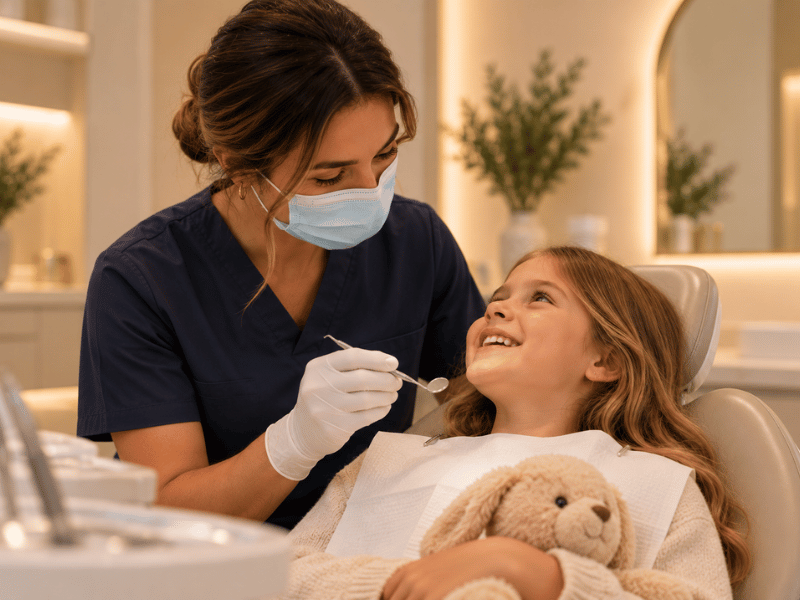
A positive relationship with the dentist can shape how a child feels about their oral health for years to come. At Sands End, we want dental visits to feel familiar, reassuring and never rushed. Our approach to children’s dentistry is centred on prevention and confidence. We’ll gently check how your child’s teeth, gums and bite are developing, help them learn how to care for their smile and give parents practical advice for looking after growing teeth at home.

Every child is different, so we’ll take things at their pace — explaining what we’re doing in age-appropriate language and allowing time for them to become comfortable with the environment and our team.

Book a Children's Appointment right line windmill plain arrow right line mammoth mountain plain arrow
Sands End Dental & Face Studio

Building healthy habits from an early age.

Children’s mouths change quickly as baby teeth appear, permanent teeth begin to emerge, and independence grows. Regular dental care allows us to follow that development, identify concerns early and help make looking after their teeth part of everyday life.

  • Positive experiences: Gentle, familiar visits can help children become comfortable with dental care from an early age.
  • Prevention first: Regular examinations help us identify early signs of decay and other concerns before they become more complicated.
  • Growing smiles: We’ll monitor how baby and permanent teeth are developing and how your child’s bite is changing.
  • Healthy habits: Age-appropriate brushing and oral-health advice help children gradually learn to care for their own smile.
  • Dietary guidance: Practical advice for parents and children around sugar frequency, drinks and habits that can affect dental health.
  • Support for parents: A chance to ask questions about brushing, teething, dental development or anything else you’re unsure about.

A Gentle Approach

At their pace, with plenty of reassurance.

For us, a successful children’s appointment isn’t simply about completing an examination. It’s about helping your child leave feeling comfortable about coming back.

  • Familiarity first: Younger or nervous children may simply need time to get used to the room, chair and people around them.

  • No unnecessary pressure: If your child needs a little more time, we’ll adapt the appointment rather than forcing an experience that could make future visits more difficult.

  • Simple explanations: We’ll explain what we’re doing in language appropriate to your child’s age and understanding.

  • Celebrate progress: Small steps matter. Sitting in the chair, opening wide or learning a new brushing technique can all help build confidence for next time.

What happens during your child’s appointment?

The appointment will be adapted to your child’s age, confidence and stage of dental development. For younger children, the first few visits may be deliberately simple.

01
Meet & Settle In

We’ll give your child time to become familiar with us and the surroundings before beginning.

02
Gentle Examination

We’ll check their teeth and gums and look at how their mouth, teeth and bite are developing.

03
Prevention & Advice

We’ll discuss brushing, fluoride, diet and other preventive measures appropriate to your child’s individual needs.

04
Growing Together

We’ll explain anything we’ve noticed, answer your questions and recommend when we’d like to see your child again.

At Home

Good habits begin between appointments.

The everyday routine at home has the biggest influence on your child’s dental health. We’ll tailor advice to their age, development and individual needs, but a few simple principles provide a strong foundation.

  • Brush twice a day: Help your child brush thoroughly twice daily using an age-appropriate amount of fluoride toothpaste.

  • Supervise while they learn: Children develop brushing skills gradually. Parents should continue to supervise or help until their child can clean effectively on their own.

  • Think about frequency: It’s not only the amount of sugar that matters — how frequently sugary foods and drinks are consumed also affects the risk of tooth decay.

  • Make it routine: Keeping brushing predictable and positive can help it become an ordinary part of morning and bedtime rather than a daily negotiation.

A preventive approach.

Depending on your child’s age, dental development and individual risk of tooth decay, we may discuss additional preventive measures alongside regular examinations and good home care.

01
Fluoride Varnish

Fluoride varnish may be recommended to help strengthen tooth enamel and reduce the risk of decay where appropriate.

02
Fissure Sealants

In suitable cases, a protective coating can be applied to the grooves of certain back teeth to help protect areas that can be difficult to keep clean.

fees

Children’s dental fees

Clear, transparent pricing for caring for growing smiles. If your child requires treatment, we’ll explain the recommended options and relevant costs clearly before proceeding.

  • Child examination (under 16): £25
  • Fissure sealant (per tooth): £25
  • Fluoride application: £30

Membership

Dental care for the whole family

Our family membership options are designed to make regular preventive care simpler for parents and children, with plans tailored to different stages of family life.

Child Smile Add-On: £10/month (per child)

Book a Children's Appointment right line windmill plain arrow right line mammoth mountain plain arrow View Full Fee Guide right line mammoth mountain plain arrow right line man friday plain arrow

your questions answered

Frequently asked questions

When should my child first visit the dentist?

We encourage parents to introduce children to the dentist from an early age, ideally once their first teeth begin to appear. Early appointments are often very simple. The aim is to help your child become familiar with the dental environment, allow us to monitor their developing teeth and give you practical preventive advice.

Starting early can help dental visits become a normal part of life rather than something introduced only when there is a problem.

What happens at my child's first dental appointment?

That depends largely on their age and confidence. For a young child, a successful first visit may simply involve meeting the team, becoming familiar with the room and allowing us to have a gentle look at their teeth. As they become more comfortable, appointments can gradually include a more complete examination and age-appropriate oral-health advice. We won’t rush your child simply to complete a checklist.

How often should my child see the dentist?

There isn’t one interval that’s appropriate for every child. How frequently we’d like to see your child will depend on factors such as their age, dental development, oral health and individual risk of tooth decay. Following their examination, we’ll recommend an appropriate recall interval for them.

When should children start brushing their own teeth?

Children should be encouraged to take an active role in brushing as they grow, but the ability to clean effectively develops at different ages. Parents will usually need to brush or supervise for some time after a child wants to brush independently. We’ll help you assess how well your child is managing and show both of you areas that may need more attention.

Which toothpaste should my child use?

Fluoride toothpaste plays an important role in helping protect children’s teeth from decay, but the appropriate fluoride concentration and amount of toothpaste depend on your child’s age and individual needs. We can advise you on an appropriate toothpaste and how much to use at your child’s appointment. I prefer this to hard-coding detailed fluoride concentrations into your website, which can become outdated or be misapplied.

What can I do to help prevent tooth decay?

Twice-daily brushing with fluoride toothpaste, appropriate parental supervision and sensible eating and drinking habits provide the foundation of prevention. In particular, reducing how frequently teeth are exposed to sugary foods and drinks can help reduce the risk of decay. Regular dental examinations allow us to monitor your child’s teeth and provide additional preventive advice or treatment where appropriate.

What are fluoride varnish and fissure sealants?

Fluoride varnish is a concentrated fluoride treatment that may be applied to the teeth to help strengthen enamel and reduce the risk of decay. Fissure sealants are thin protective coatings that can be placed over the grooves of certain back teeth, where food and plaque can otherwise be difficult to remove. Neither is automatically required for every child. We’ll recommend preventive treatment according to your child’s individual needs.

My child is nervous about the dentist. Can you help?

Yes. Children can feel unsure about unfamiliar places, particularly if they’ve previously had a difficult dental experience. We take a calm, gradual approach and give children time to become familiar with the environment and our team. We’ll explain things simply, avoid unnecessary pressure and work at a pace appropriate for your child. If your child is particularly anxious, please let us know before the appointment so we can plan their visit accordingly.

What happens if my child damages or knocks out a tooth?

Contact us as soon as possible so that we can understand what has happened and advise on the appropriate next step. If a permanent tooth has been completely knocked out, urgent dental attention is important. Handle it by the crown rather than the root and keep it moist while seeking care. Do not attempt to reinsert a knocked-out baby tooth, as this can damage the developing permanent tooth underneath.

When might my child need orthodontic assessment?

As children’s adult teeth emerge and their jaws develop, we monitor how their teeth and bite are forming. If we identify crowding, bite concerns or another aspect of development that may benefit from orthodontic assessment, we’ll explain what we’ve noticed and advise on the appropriate timing for further review. Not every irregularity requires treatment, and the right timing varies from child to child.

Your clinical team

Our approach to children’s dentistry is simple: prevention first, plenty of patience and care that helps young patients feel comfortable from the very beginning.

Back to General & Family left line mammoth mountain plain arrow left line mammoth mountain plain arrow

begin early

A healthy smile starts young.

Whether it’s your child’s very first visit or you’re looking for a new family dentist closer to home, we’d love to welcome you both to Sands End.

Book a Children's Appointment right line windmill plain arrow right line mammoth mountain plain arrow whatsapp whatsapp WhatsApp Us
whatsapp whatsapp