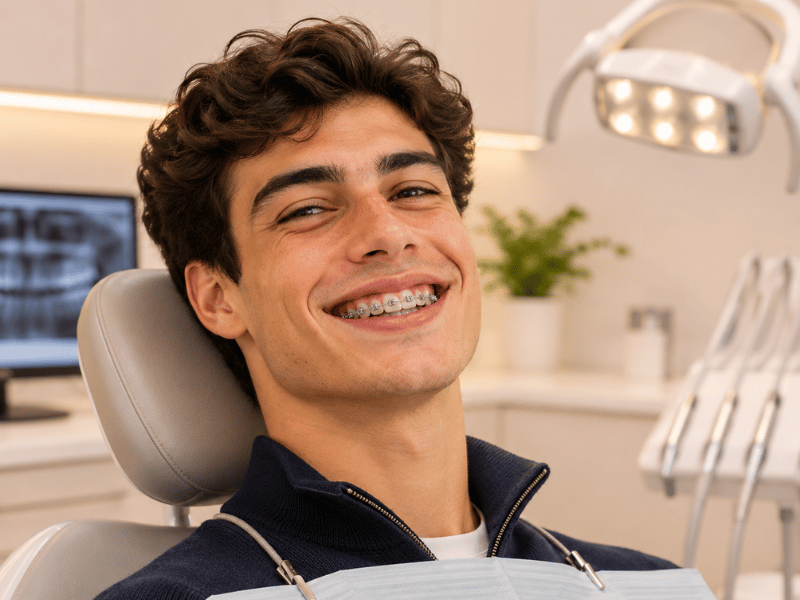
Fixed braces use small brackets attached to the teeth and an orthodontic wire to apply controlled forces that gradually move the teeth towards their planned positions. Unlike clear aligners, fixed braces remain attached throughout active treatment and are adjusted at review appointments by your clinician.
“Quick braces” is a term sometimes used to describe more limited orthodontic treatment focused mainly on selected visible front teeth. The teeth are not necessarily being moved biologically faster. Treatment may take less time because the treatment objective is smaller than in comprehensive orthodontics.
Limited treatment can be appropriate in selected cases, but it may not correct underlying bite concerns or other tooth positions outside the cosmetic zone. We’ll explain whether limited or comprehensive treatment is appropriate for you.
Comprehensive orthodontic treatment considers the teeth and bite more broadly and aims to achieve the agreed orthodontic objectives across the dental arches. Limited treatment focuses on a smaller number of teeth or a more specific cosmetic concern. The right approach depends on your starting bite, oral health and goals. We’ll explain the compromises or limitations associated with a limited plan before treatment.
Treatment time varies considerably. Smaller, limited corrections may require less time than comprehensive orthodontic treatment, while more complex tooth and bite movements can take considerably longer. Following your assessment and treatment planning, we’ll provide an estimated timescale based on your individual case.
It’s common to experience some pressure or tenderness when braces are first fitted and after certain adjustments. This usually settles as your mouth adapts. Brackets or wires can also occasionally irritate the cheeks or lips. If discomfort is significant, persistent or associated with a broken appliance, contact us so we can advise you.
Yes. Orthodontic treatment is not limited to children or teenagers. Adults can be treated with fixed braces where their teeth, gums and supporting tissues are healthy enough for orthodontic treatment. We can also discuss more discreet options, including clear aligners or ceramic brackets where appropriate and available.
Ceramic braces use tooth-coloured or translucent brackets, making them less visually prominent than conventional metal brackets for many patients. They still function as a fixed orthodontic appliance and require the same commitment to cleaning, review appointments and retention afterwards. Whether ceramic braces are appropriate and available for your treatment will be discussed at consultation.
You’ll be able to eat a varied diet, but certain foods can damage brackets or wires. Very hard, sticky or chewy foods generally require particular care or should be avoided during treatment. Foods such as apples or other firm items may need to be cut into smaller pieces rather than bitten directly with the front teeth. We’ll give you practical advice when your braces are fitted.
Oral hygiene becomes especially important because plaque can accumulate around brackets and beneath wires. You’ll need to brush carefully around the appliance and clean between the teeth using appropriate interdental aids. Regular professional hygiene care may also be helpful during orthodontic treatment. We’ll show you techniques and products appropriate for your appliance.
Contact us for advice. Not every breakage requires an immediate emergency appointment, but damaged appliances can interfere with treatment or cause irritation and should be assessed appropriately. Tell us what has happened and whether you’re experiencing pain, and we’ll advise on the appropriate next step.
Not necessarily. Fixed braces and clear aligners are different ways of delivering orthodontic treatment, and each has advantages and limitations. Clear aligners offer discretion and removability but depend on consistent wear. Fixed braces remain in place and can provide useful control for a wide range of tooth movements. The better option is the one that is clinically appropriate for your teeth and bite and works realistically with your lifestyle.
Yes. Retention is an essential part of orthodontic treatment. Teeth have a natural tendency to move after braces are removed. Retainers help maintain the corrected positions while the surrounding tissues adapt and over the longer term. We’ll recommend a retention plan and explain how your retainers should be worn. Long-term retention is normally required to maintain the result.
Orthodontic treatment has potential risks and limitations, which vary between individuals. These can include temporary discomfort, irritation from the appliance, tooth decay or permanent marks on the teeth if plaque control is poor, gum problems, and changes to the roots or supporting tissues. Teeth can also move again after treatment if retainers are not worn as advised.
Appliance breakages or missed appointments can interrupt treatment, and some teeth may respond differently from initially predicted. Your clinician will assess your individual risk factors and discuss the relevant considerations as part of the consent process before treatment begins.